



For years, Black women have been described as the backbone of the Democratic Party. They organize, mobilize voters, defend democracy in the most adverse political environments, and consistently turn out at the ballot box in numbers that keep the party competitive nationwide.
However, the lesson that we, as Black people, continue to learn, is that admiration is not the same as power.
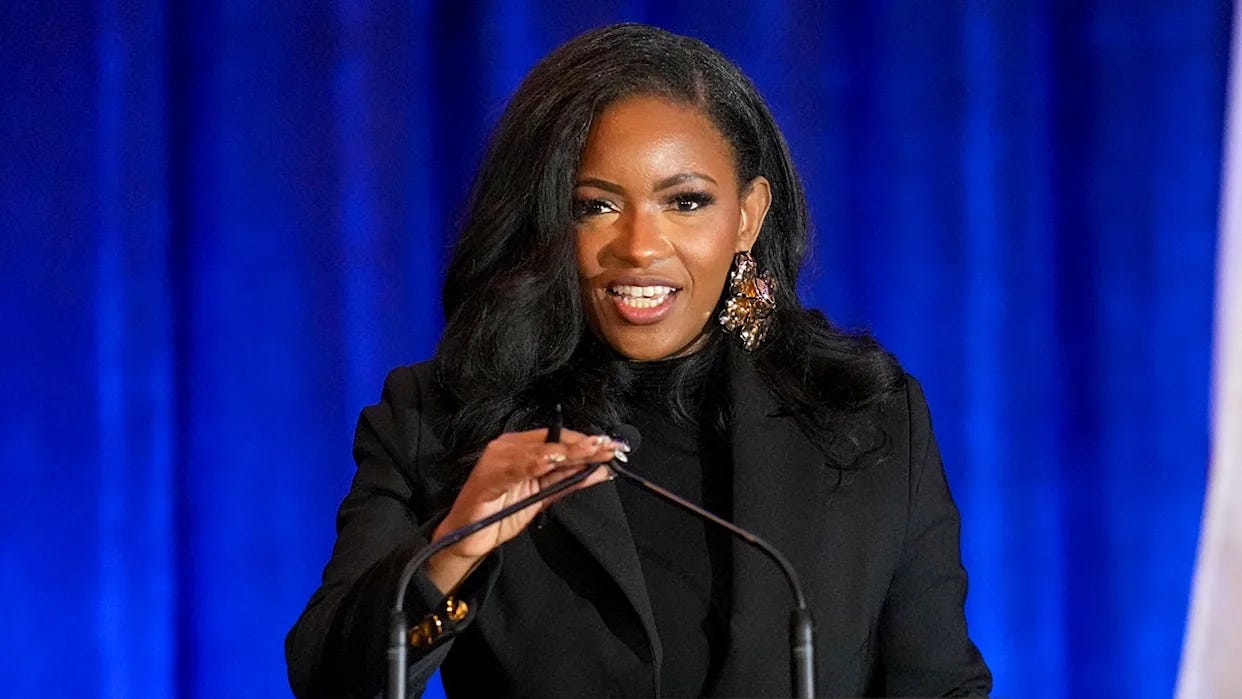
The loss involving Congresswoman Jasmine Crockett highlights a recurring tension inside Democratic politics: the difference between celebrating Black women and actually elevating them to positions of leadership and authority.
Crockett is not a newcomer. She is widely regarded as a skilled legislator and one of the Democratic Party’s most visible defenders on the national stage. Her legal background, her effectiveness in congressional hearings, and her ability to connect with voters made her a serious contender for U.S. Senate.
Yet the outcome raises a familiar question:
Why does the Democratic Party, and its base, so often praise Black women while stopping short of placing them in top leadership roles?
This is not an isolated moment. Across decades of American politics, Black women have frequently been instrumental in building coalitions and energizing turnout. From local organizing to national campaigns, their contributions have shaped electoral victories for the party.
But when leadership decisions are made behind closed doors or within party caucuses, the results often tell a different story.
That contradiction has become increasingly difficult to ignore.
Black women are asked to deliver results at the grassroots level. They are celebrated on campaign stages and during election night speeches. Yet, when it is time to place them in roles to drive real change, deliver results for the American people, or call them your next President or U.S. Senator, their “electability” and qualifications are always placed under unnecessary scrutiny.
This issue is larger than any single race. There is a systemic structural problem in how leadership pipelines are built, who is seen as “electable,” and how political networks influence internal party elections.
In other words, the question is not simply who lost a leadership vote.
The question is whether the Democratic Party is fully living up to its own rhetoric about representation and equity.
If the party truly believes that Black women are the backbone of its coalition, then the next step is obvious: recognition must translate into votes.
Because praise without power eventually begins to sound hollow.
I guess the adages “Trust Black Women” or “Believe Black Women” will just continue to be great slogans that sell a lot of t-shirts.