


It’s time to say it out loud: The majority of voters hold diametrically opposed beliefs at the same time — and many don’t even realize it. It’s not because people are inherently immoral or unintelligent but because most people don’t build their politics from a coherent well thought out philosophy. Voters build their political ideology from lived experience, emotional immaturity, racial identity, religious affiliation and selective exposure. That means contradictions can sit comfortably side by side without ever being interrogated, and even when light shines on those obvious hypocrisies, most people simply don’t give a damn.
The Tax-Service Paradox
People say they want a robust fire department, a police force that provides public safety, EMS teams that arrive within minutes, well-maintained roads and bridges, reliable water that is free of sewage, and vigorous public school system.
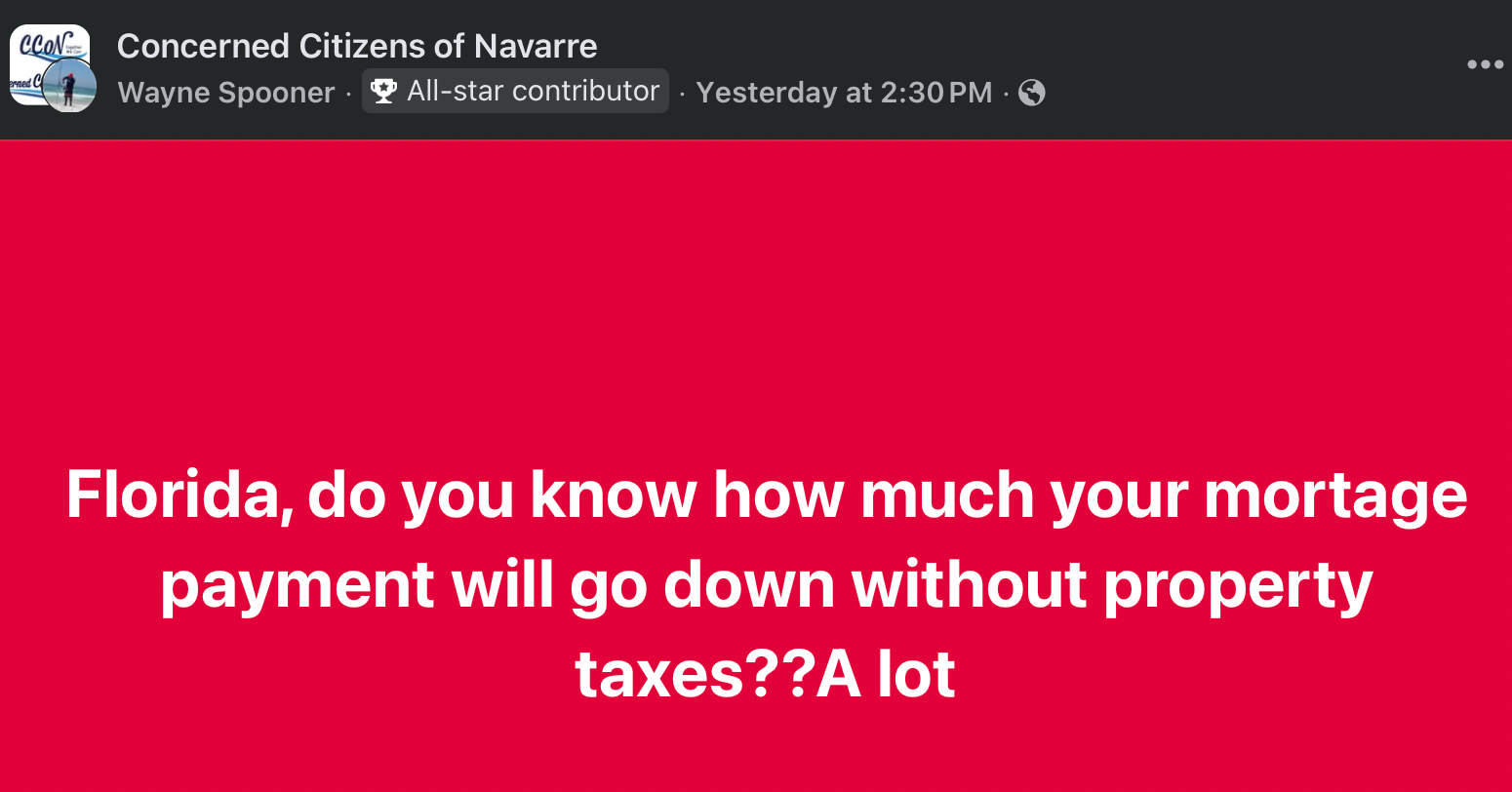
Concurrently, these exact same people want property taxes eliminated, repeated income tax cuts, and limited government. There is no moral judgment here but somebody must tell them that it’s just plain old arithmetic. Services cost money and tax revenue funds services. When you reduce your county’s revenue stream, you reduce the services your county will be able provide to your community. Yet many voters hold both positions at once. People have premium expectations with government services stocked on the clearance rack. And the gag of it all is that we never require voters to sit with the tension of their contradictory views.
“Small Government,” Except When It Matters
Many conservative American voters in Florida describe themselves as advocates of small government. That’s until a hurricane hits the Panhandle, then suddenly people are knocking each other over for their FEMA checks. There is nothing that gets the over 65 crowd more hot under the collar than when Medicare and Social Security payments are delayed. And yet, voters over the age of 65 tend to vote for the party of “small government”.

I could go on regarding how deeply enraged “small government” conservatives become when veterans benefits are cut, farm subsidies disappears, and when small businesses need a federal loan.
In theory, government should shrink. In crisis, government cannot be large enough.
That contradiction isn’t hypocrisy in a cartoonish sense. It’s human. We dislike abstract systems — until we personally need them. Then we complain when those systems don’t appropriately respond to an individual need when we’ve pared the system down to its bare bones.
The Free Market — With Guardrails
Conservative voters genuflect at the altar of the American free market economy. That is until the free market raises their prescription drug prices, denies their healthcare coverage, poisons their local water supply, or refuses an airline refund. Only then are regulation policies necessary. People don’t often reject markets. They reject market outcomes when those outcomes affect them directly.
Why This Happens
Most voters are not ideological, they are situational. For me that is not necessarily a good thing. Sure, most voters want core foundational principles of safety, prosperity, health, fairness, stability, and dignity. But they also collectively only respond to threats — real or perceived. Unfortunately situational thinking does not produce coherent systems. It produces impulses, and impulses don’t align with math, economics, or plain old good governance.
The Anomaly of Consistency
Here’s the uncomfortable truth: being ideologically consistent is unusual. I am rare, and I don’t care.
Here are some basic tenets that people can begin to accept to climb out of their hypocrisy:
1 If you genuinely believe in small government, you must accept smaller services.
2 If you genuinely believe in expansive public services, you must accept higher taxes.
3 If you believe in free markets, you must tolerate uncomfortable market outcomes.
4 If you believe in environmental regulation, you must tolerate government bureaucracy.
Following your beliefs to their logical conclusion often costs you something — convenience, comfort, political allies, even popularity. But it’s worth asking:
Where do my beliefs contradict each other?
What outcomes do I demand without accepting their cost?
What principles do I apply universally — and which ones do I suspend when it benefits me?
This isn’t about shaming voters, it’s exposing intellectual dishonesty and sometimes ignorance. Sure a democracy can survive disagreement (although unhealthily). But we do see Democratic struggles when millions of people demand outcomes and defy the trade-offs required to produce them. So before we critique the other side’s hypocrisy, it may be worth auditing our own.
Beautifully written!!!! Thank you!!! Thank you!!! Thank you!!!!