



As Donald Trump prepares to deliver a State of the Union Address to anyone who’ll listen, Democrats are once again revealing their fatal flaw; disunity.
In a recent interview of Congresswoman Lauren Underwood, independent journalist Joy-Ann Reid exposed something we all know well: Democrats just can’t seem to get their sh!t together. Some members of the Democratic Party will boycott the speech entirely, while others plan to attend. Some are planning a staged walk out mid-address, while others plan to sit in visible protest. Some members of Congress thought they were being innovative by holding competing town halls with livestream commentary in real time.
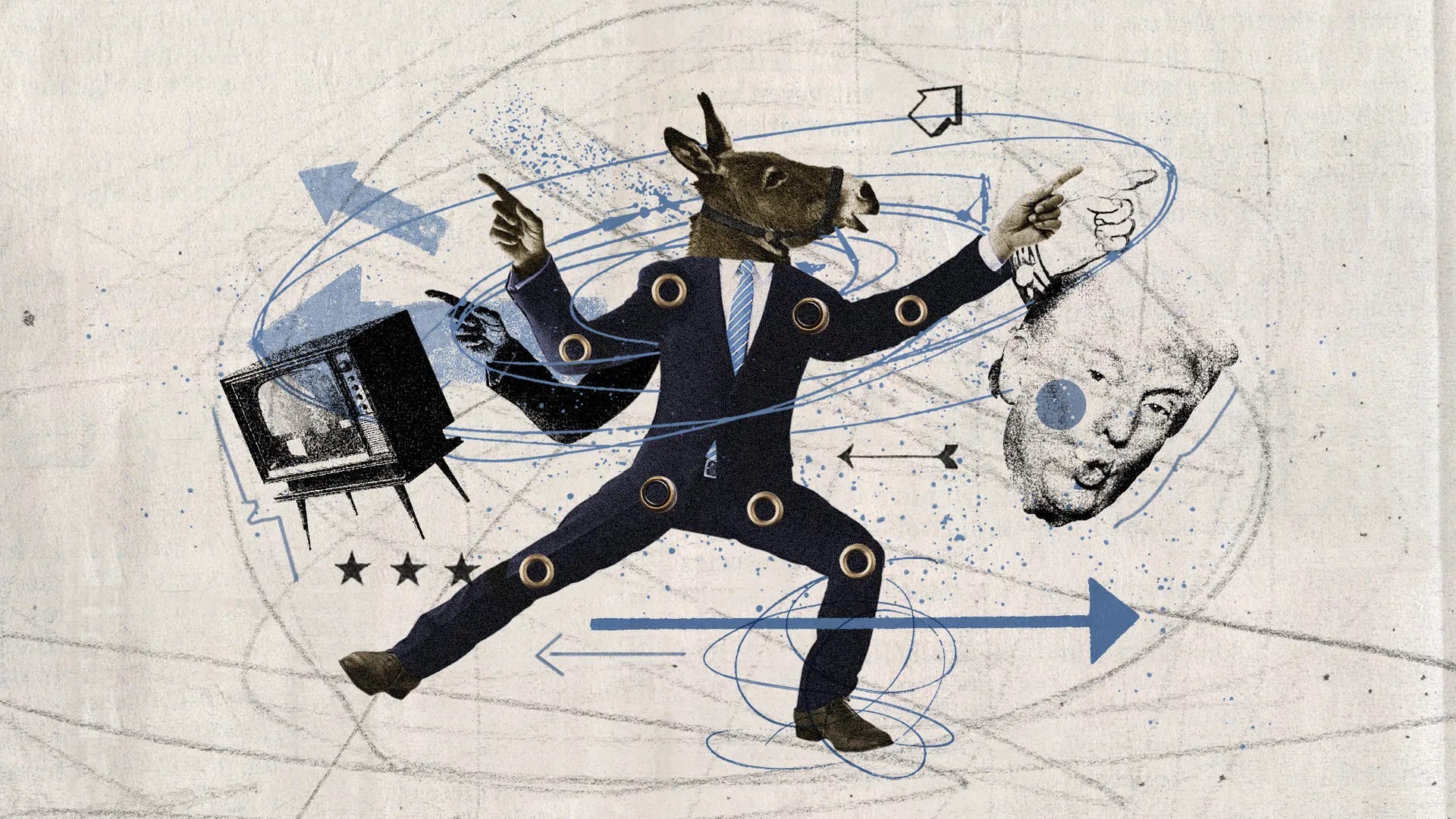
But in the end this is not strategy, this is chaos. And chaos is not how you confront an authoritarian regime as disciplined and media-savvy as the Republican Party.
Because when you talk about everything, you communicate nothing.
When Democrats try to do everything, they essentially accomplish nothing.
Republicans Understand Power
Republicans can disagree privately — and often do. But when the stage lights and cameras turn on, they know how to close ranks. Conservative politicians are masters at projecting strength and skilled at sending a unified signal. They are also disciplined in repetition because they have a fundamental understanding of the tenets of political communication:
If your words don’t spread, your words don’t work.
Democrats, meanwhile, seem incapable of choosing a single posture.
Are they boycotting because Trump is a fascist?
Are they attending because the office of the presidency must be respected?
Are they protesting from inside the chamber?
Are they counter-programming to a single online stream or is each legislator going live solo?
If you have to ask what the strategy is, there isn’t one.
Protest Without Coordination Is Self-Indulgence
Leader Hakeem Jeffries has advised his caucus to do whatever they feel comfortable doing, and every individual member of Congress will justify their personal decision. But politics at the national level is not about personal expression it is about collective power. A boycott only works if it’s unified, a walkout only lands if it’s coordinated, a counter-event only matters if it’s concentrated.
At a time when a coordinated opposition to a radical regime is paramount, fragmentation sends one message: Democrats cannot even agree on how to respond to the most predictable political moment of the year.
That is not resistance. That is amateur hour.
The Pattern Is the Problem
This incompetence isn’t new, and that’s the problem. Democrats routinely struggle with message discipline. In fact, they struggle with message period. If a voter showed up to a Republican vs. Democrat bake sale, Republicans would sell the brownie for $0.50 and Democrats would sell the brownie recipe for $1.00. Democrats air internal disagreements in public, debate tactics in front of cameras, and like the State of the Union response, they allow factions to freelance during moments that require choreography.
Meanwhile, Republicans understand something simple: Optics shape perception, perception shapes power, and power shapes political outcomes.
If Democrats cannot align around a State of the Union response, what exactly are voters supposed to believe they can or will align around?
The Hard And Inconvenient Truth
Voters interpret unity as strength and focus groups consistently report that voters respect strength even when they disagree with the substance. People interpret division as weakness — even when the intentions are noble.
Democrats can condemn Trump all they want. He deserves all the condemnation that comes his way, but unless Democrats develop discipline, message control, and unified strategy, they will continue to look reactive instead of prepared.